
The “tube stomach” or “vertical sleeve gastrectomy” surgery is the most frequently performed obesity surgery worldwide.
Gastric sleeve surgery is the most effective weight loss method, which has also been proven by scientific studies, in cases where the targeted weight control cannot be achieved despite long-term diet and sports support.
Gastric sleeve surgery; For every patient with a body mass index (BMI) over 40 kg/m2 and additionally a BMI of 35 kg/m2, diabetes , hypertension, obstructive sleep apnea syndrome, hyperlipidemia etc. It can be done to people with co-morbidities.
Although sleeve gastrectomy surgery can be performed with an open or closed (laparoscopic) technique, the laparoscopic method is preferred unless otherwise stated.
Gastric sleeve gastrectomy surgery is performed using special equipment that can pass through small holes in the abdominal wall. After the large part of the stomach is separated from the surrounding tissues, a long guide tube inserted through the mouth into the stomach is cut using a stapler tool and the stomach is shaped into a tube. This guide tube is removed after cutting.
Open surgery is performed if there is an obstacle to closed surgery or if the operation cannot be continued closed. Apart from this, all surgeries are performed closed.
Gastric sleeve surgery, contrary to popular belief, is not more risky than other surgeries. As shown in the studies, the risk of death due to sleeve gastrectomy surgery is below 1/1000.
The average duration of sleeve gastrectomy surgery is 1 hour.
Although the upper age limit for sleeve gastrectomy surgery is generally accepted as 70, there is no definite decision on this issue. Eligibility for surgery is decided by considering the general health status and life expectancy as well as age.
After a standard sleeve gastrectomy, a few incision scars are left with diameters ranging from 5 mm to 15 mm.
Gastric sleeve surgery cost varies according to the current price of the equipment used, the patient's social health insurance and the agreements of the hospital where the surgery will be performed.
The success rate of sleeve gastrectomy surgery increases when patients comply with the post-operative diet and exercise programs.
After gastric sleeve surgery, nutrition is gradually increased under the supervision of a dietitian. The diet, which is started with clear liquids after the surgery, is continued with solid food at the end of the first month. In addition to foods, nutritional supplements are also used.
In order to have sleeve gastrectomy surgery, your body mass index (BMI) must be calculated first. BMI is obtained by dividing your body weight in kg by the square of your height in m. You can have sleeve gastrectomy surgery in cases where your BMI is over 40 or over 35 and accompanied by co-morbidities.
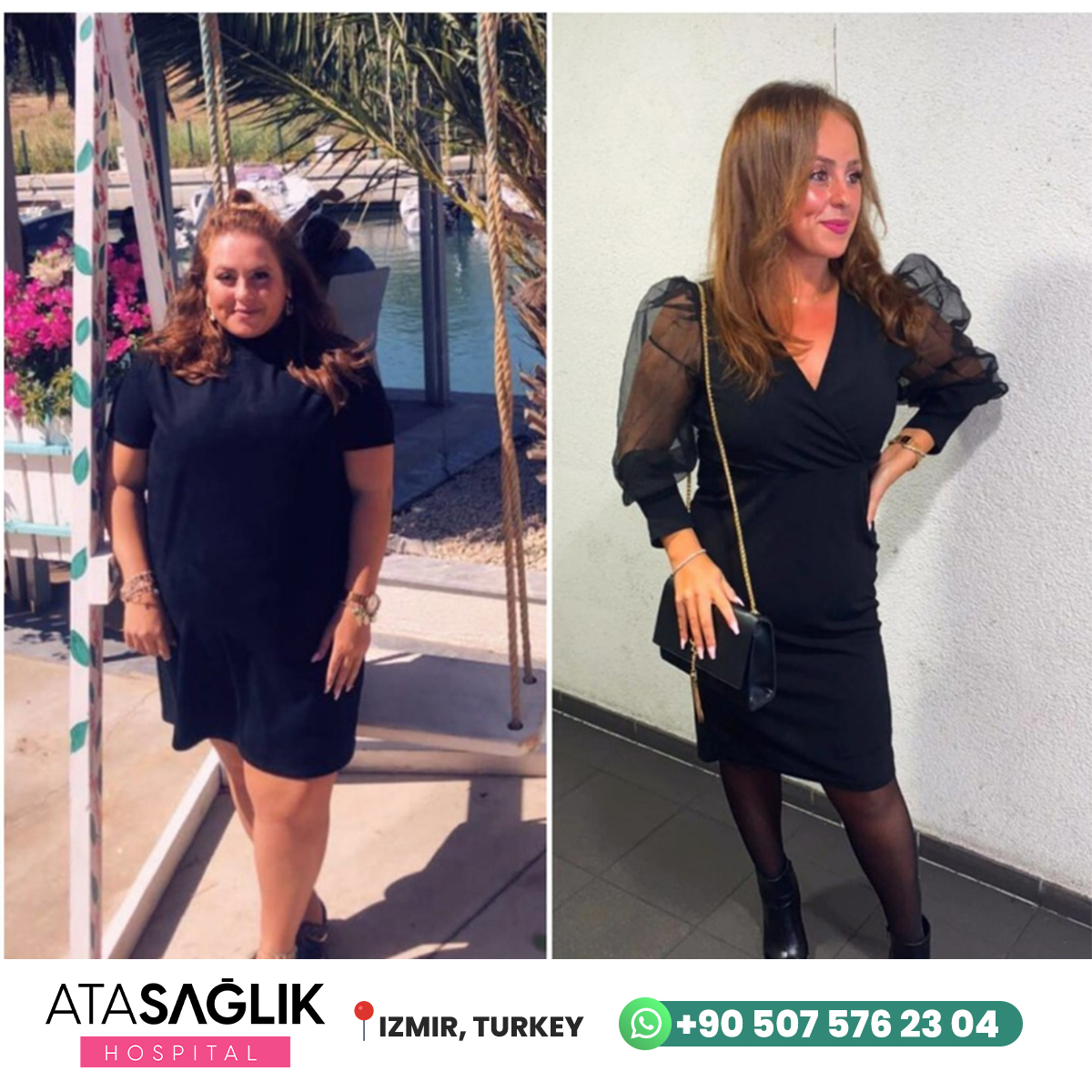
Weight loss after sleeve gastrectomy surgery varies from patient to patient. In order for the surgery to be considered successful, 60% of the excess weight (excess weight = current weight - ideal weight) must be lost at the end of 1 year.
Seren Serengil, Ümit Erdim, Işın Karaca, Deniz Seki, Çiçek Dilligil, Fatih Ürek, Emel Müftüoğlu, Ozan Orhon, Faruk Sabancı, İskender Paydaş
Patients who do not follow the diet and exercise recommendations after sleeve gastrectomy may gain weight again.


We care about your health! We are at your service with modern technologies, expert physicians and a personalized approach.
Click for the address description;
Izmir Private Ata Sağlık Hospital Türkçe
 English
 German
 +90507 576 2304


 Appointment
 Contact Us
 WhatsApp